
What Character Skills?
For fantasy tabletop roleplaying games

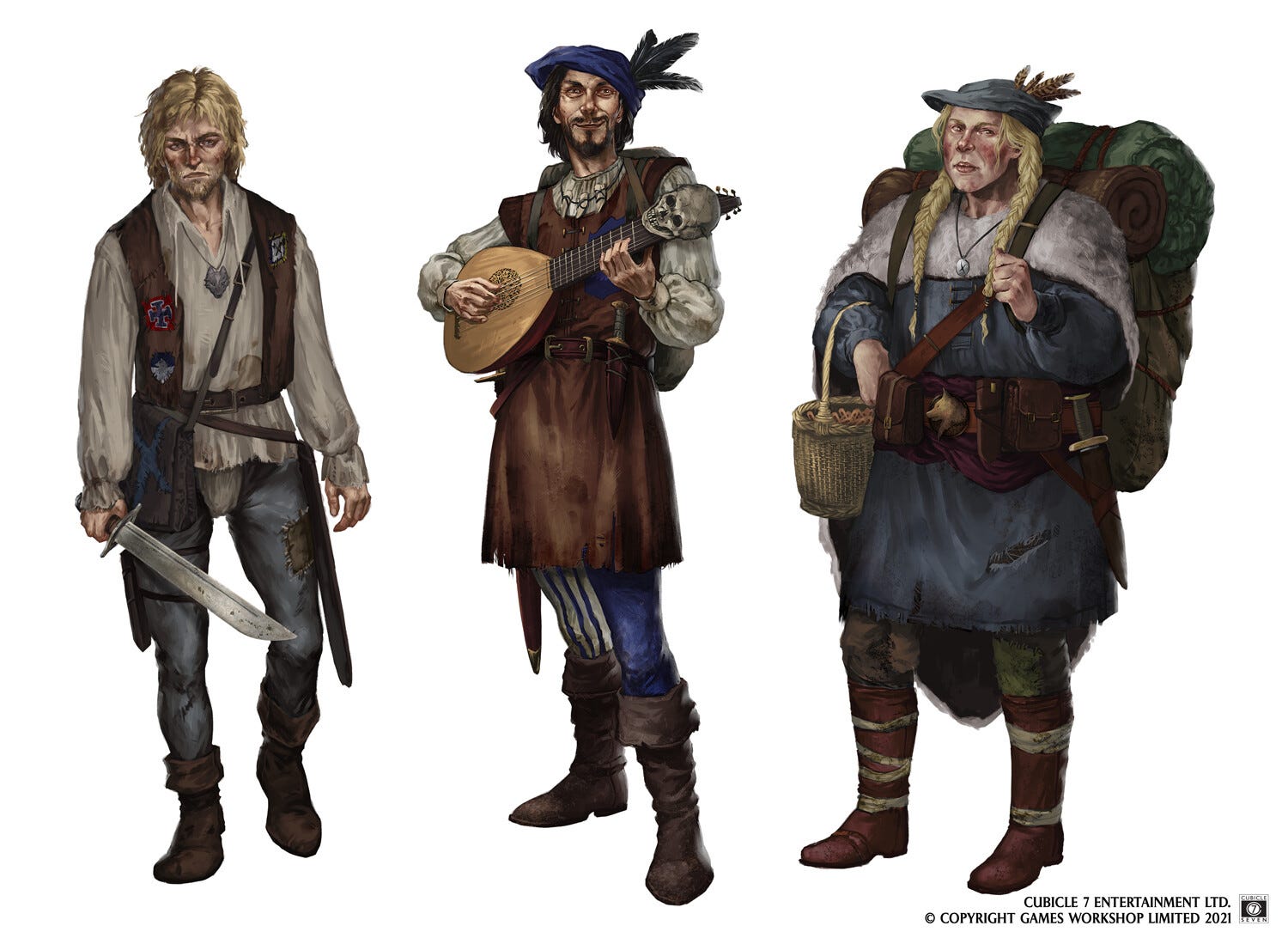
Admit it. When you hear “fantasy tabletop roleplaying games,” the characters above are what you see in your head. Thugs dressed in filthy rags, carrying enough weapons to start a war. Venturing into labyrinthine dungeons with but a single strategy - to kill every living being they find inside, then loot the place for the treasure.
All their adventures start the same - “You all meet in a tavern.” The characters find out about the peril that the Town faces; and the next thing you know is, you’re standing in front of the dungeon entrance. Time to go in and do the killing bit.
A Facebook group dedicated to one such FRPG recently received a furious post from some newbie.
Are the following really RPG skills? Cookery, Brewing, Embalming, Drawing, Glassworking? Does anyone really roll for … Cookery? How do you roleplay that? Is weaving really an RPG skill?
Just curious if these are dump skills or real RPG skills … Why would you test these?
Strategic Considerations
I recently came across Strategy, by B H Liddell Hart. An eye-opening book on the planning of long-term or overall goals in a situation such as a conflict or a war. This book rightly goes alongside Sunzi’s The Art of War, Clausewitz’ On War, and Robert Greene’s The 33 Strategies of War, not to mention Machiavelli’s The Prince.
Books like these press home the simple messages of Begin with the end in mind and Plan All The Way To The End. The 33 Strategies of War also emphasises the point that one cannot fight a whole war alone - one needs allies who know what their job is, and one must plan the outcome of the war where you bring everyone out alive for whom you are responsible.
This is true whether or not you are working on an actual front line in a warzone, or a boardroom meeting. Everybody should know the layout of the land, the key people, and a good guess on what they’ll do during the meeting - as well as how to adapt to something unexpected and rewrite the plan on the fly if necessary.
Strategy is based on knowledge: knowledge of yourself and capabilities, and the knowledge and capabilities of your people, especially the lived experiences they bring to the situation that are outside your knowledge.
This is complex, and deep, and meaningful - and, going by what I read in that group - it’s all over the head of the OP.
Meaningful Skills
Let’s take a real life situation. A job interview.
You saw the want ad. You sent the CV / resume to the employer. It got past the algorithms, and landed on HR’s desk as a possible.
The interview’s booked. You’re dressed to the nines, waiting your turn. And then you’re there, facing these strangers across the desk.
What do you do if they ask you about your hobbies? Or ask you to say a little bit about yourself?
Here’s where it’s a good thing to have some of these “useless” or “hobby” skills to hand. They make you sound like a real human being.
Politicians
We’ve had two examples, in the UK, of politicians who could not, for the life of them, answer a simple question like “How do you like to spend your spare time?” Years back, I asked an actual Bishop what he did when he was not in a cassock, on duty, and he explained that he was always on duty.
I didn’t really think. Nobody did. You did not associate priests and chasing after small boys back then.
But politicians are a different breed. They aren’t supposed to be “always on duty.” They have time off, they have personal time other than spending it in the Strangers’ Bar or one of the other pubs they seem to have in Westminster, and they have human spouses and kids.
Which makes it disturbing if an individual politician doesn’t have a real hobby, and all they can come up with is something ridiculous like “running through wheat fields” (Theresa May) or “making model buses” (Johnson).
It makes them sound like walking, talking masks of people, rather than real people. If you don’t seem to have any interests at all … if you can’t list anything other than your work skills outside of a formal interview … you’re coming across as someone who is barely there.
Examples I bring to an interview include - an interest in learning languages; a fascination for, of all things, spreadsheets; a love of European (and other) electropop; and Tarot cards (I’m a paid-up member of TABI, the Tarot Association of Britain and Ireland). These pursuits occupy my time when I’m not giving of my time to some employer; and I’d continue to pursue them even if I weren’t working for the company I’m being interviewed for.
In short, I just showed the would-be employers that I am as human as the rest of them; and, success or failure aside, I’d be able to chat with them outside of the interview room, outside office hours, and gladly open them up to discuss what interests them of a day; what they would do, full time, if the need to make money were no longer on the table.
Which brings me right back to player characters in fantasy tabletop roleplaying games, and those “useless” non-combat skills that the Facebook poster did not think any PC should be devoting their energies to learning. Why would you want to learn Cookery? Who checks Cookery skill in the middle of a fight, all swords flashing and the wizard casting Fireball?
That only says one thing about the OP. All they see in, all they get out of, a roleplaying game is the battle scenes. Anything not in a battle scene is a waste of time to them. Just heal up those Hit Points and let’s get back to the next fight scene. The next killings. The next body pile.
Why Need Non-Combat Skills?
One might as well ask “Why should a player character need combat skills, combat magic? What is the point of them, since they are only ever used in fights, combats, and mass murder? What sane human cultivates skills in combat and killing?”
Why would a player character develop any kinds of skills, from Chef to (in a SF roleplaying game) Diplomat, Steward, or Streetwise? Simple. These skills, whether they are experts or mere novices, show that the player is running a rounded character with depth. One which is living a life outside of adventures.
Someone for whom “adventure” can mean some escapade other than “I go into dungeons, kill everything inside and make off with the treasure.”
That’s not an adventure. That’s a video game.