
Memory: The Little Things ...
It's more than just identity

Something came to me this week. A phrase I overheard in a dream.
“Memory is not just about identity. It's the stories we tell each other and ourselves to keep us from going insane.“
I am a member of a Discord server called The Black Rose Society - a worldwide group of vampires. During a discussion on the server, the topic of personal narratives and identity turned up.
I used that phrase of mine from the dream on that discussion thread. They asked me for clarification.
For the record, I’m “Baccata.”
Baccata (UTC) (they/them/ghaH): For narrative, we need memory.
Memory is not just about identity. It's the stories we tell each other and ourselves to keep us from going insane.
Luna Luv: Can you go into a bit more detail on this? What kind of stories?
Baccata (UTC) (they/them/ghaH): You know how people have little myths and legends about themselves - how they got to where they are, how they met the loves of their lives, how they experienced something that turned them off one food source, or made another food source their favourite? Or how they shaped their ethos, forged from experiences of moral successes, moral failings in their past?
Baccata (UTC) (they/them/ghaH): Now take that away.
Baccata (UTC) (they/them/ghaH): Imagine losing all those little stories you tell yourself, and the tales you tell your peers. You don't remember the million little things that made you who you are.
Baccata (UTC) (they/them/ghaH): All you know is what you know right now, with no context to explain who you are, what you are doing, who the person is in front of you whom you just fed off.
Baccata (UTC) (they/them/ghaH): What you just did.
Baccata (UTC) (they/them/ghaH): Narrative, identity, require memory. Memory is the foundation of your narrative. The earth beneath the rock that is sanity.
Luna Luv: I want to hone in on this because this is a topic we've actually previously discussed — the theory of narrative identity development.
Essentially, this theory helps us understand the creation and ever-changing nature of identity by viewing it as a construct of an individual’s life experiences into an internalized, expanding and evolving story of the self, that provides one with a sense of cohesion, unity, and purpose (which I think is what you were getting at with emphasizing the importance of "memory"). Essentially, every individual views themselves as the protagonist of their life, as every experience they have is viewed from their own perspective alone. Thus, individuals (almost entirely sub- or unconsciously, though by having these discussions we are making them conscious) tend to weave these experiences into a coherent narrative pattern, often using traditional aspects of writing such as characters, episodes, plots/arcs, themes, etc.
This spawned a whole discussion on the topic.
The initial context came from a post on another Discord server. An adventure for Destined, a tabletop roleplaying game with a theme of superheroes, will be released in April 2024. The premise is that, without warning, the superheroes of the setting all wake up with no memory of who they are, or what their powers are.
This is where the phrase popped into my head - what any of my characters would do if they woke up a tabula rasa, no clue as to who or what they are. How many of them would turn villainous?
Hypnosis can affect memory, in the short term. When you go into a trance, when you find your conscious and unconscious thoughts showing, stopping, even with your eyes wide open, still looking at the words, still listening to the voice, or still staring at the spiral, and your mind goes blank - any good hypnotist can instruct your mind to shunt aside recent sensations into short-term memory only, and keep them from working memory and long term memory, such that when I instruct you to come back in the room, you’ll have forgotten everything you experienced while you are in the trance.
And you can temporarily limit access to longer term memories, temporarily blocking your identity from your forebrain. Set it up right, and you’ll forget your own name and tell me as much.
And your conscious mind is as much a construct of memory, of the little things you tell yourself to keep the shape of your conscious mind coherent.
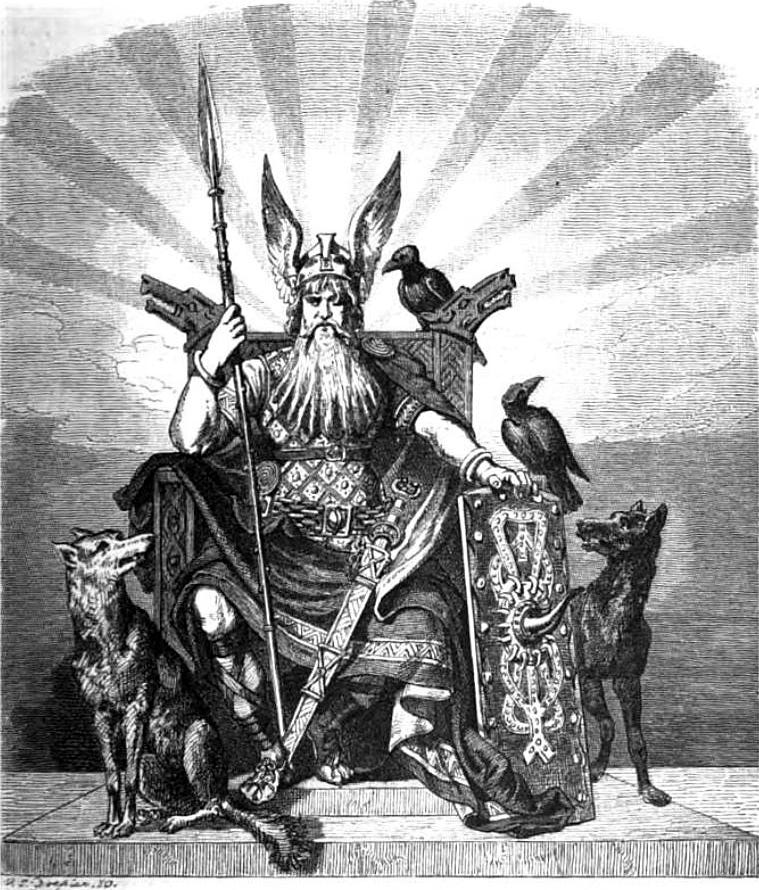
Odin is remembered for having two ravens perched on his shoulders, called Huginn and Muminn. Each day, they flew away, only to return at the end of the day. Without them, Odinn had no access to his thoughts or his memory.
Odin feared the loss of Huginn, Thought - but he feared the loss of Muninn - Memory - far, far more, because without Memory, Odin would have had no idea who he is.
Memory is important. Fuck dementia.