Addiction
When you can't live without something

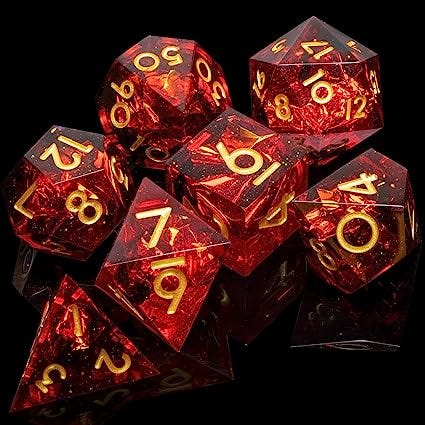
It’s safe to say that everybody has some form of addiction which keeps them going. Coffee, tea, smoking, alcohol, television, comfort eating, gaming, gambling, weed, other drugs, worship - whatever gets the dopamine flowing.
Tabletop gaming has been an addiction of mine for a long time. I used to roleplay Traveller an awful lot. Science fiction gaming has been my jam since I was a second instar, honestly. I always gravitated towards the stories set in space: something about the characters floating in the void screamed “home” to me, as though my place were Out There.
I gave up playing Traveller when GDW deliberately trashed and burned its Third Imperium. It was awful to see an endless stream of bad-turns-to-worse stories: Strephon assassinated, the Civil War, the Hard Times, that fucking Virus story.
I took up other games, which filled the void left behind by Traveller: mostly the World of Darkness games Mage: the Ascension and Hunter: the Reckoning.
Hunter honed my writing like nothing else. My character, Libra, fell in love, lost his girlfriend when she became an extremist, and he had to fake being an extremist himself in order to get into a terror cell of hunters threatening to blow up a power plant which was being managed by vampires’ servants.
I wrote compelling, strange, sometimes steamy and erotic stories, as he took on lovers both human and supernatural. His own son was born imbued, with access to powers Libra could not have imagined.
The kid’s name was Samuel. I’d named him after my nephew, who only got to live 25 years before he was taken from us.
The day after Sam died, I felt compelled to write a fairy story. I’d been planning on writing it for him to get it published and present it to him once he had his next birthday. Instead, it ended up going onto my Spiral Room blog as Lamplight.
The product of all of my gaming addiction had become a lifelong career in writing.
I figured out what I had been addicted to, all those years ago. The settings.
I had latched onto tabletop gaming, not for the mechanics, or for the combat, or the number crunching. I was addicted to the dream.
In Traveller, I was living through my psionic character living aboard a found, living, organic ship, plying the spacelanes with a vast canopy of “sails” like leaves on a branch soaking up energy from stars and converting it into power and motion. In Mage: the Ascension, I was a Sahajiya - a Cult of Ecstasy Seer with Mind and Prime, rather than Time, and learning just enough Life and Entropy to heal people or to make their day with little nudges of good luck.
Hunter: the Reckoning became the setting for one of the most romantic One True Pairings I had ever written, between Libra (Gregory Malpas Stewart) and Marsha Winstone, a ghoul who’d belonged to the Followers of Set (snake-based vampires who’d worshipped the Egyptian god Set, and who enslaved their mortal servants through addiction to their unusually addictive Vitae, vampire blood).
Half the fun was breaching canon. Marsha Winstone did not suffer the usual curse of ghouldom, requiring a regular infusion of Vitae once a month. It turned out that she had been born a ghoul, and effectively her powers were perpetual, including virtual immortality - ghouls remain unaging for as long as they are kept infused regularly with Vitae.
Gregory Stewart developed Hunter powers, called edges, which weren’t in the book. He could stop a monster in its tracks with a glance, and heal people with a touch. His best friend could dissolve a supernatural with some weird miasma which he could spew out of his mouth like a spray. It hurt him inside, costing himself Health, but he had a Defender edge which allowed him to recover within moments. So it was just all pain, all the time he used his edge, but no real internal harm.
And all of my characters were so different. Starfox, my Sahajiya, was an asexual tee totaller, living among a cabal of Cultists whom everybody else considered to be druggies, sex fiends, and freaks. Starfox was this one exception, because nobody else - no other Tradition - wanted her, but she found her found family among the lotus eaters of the Traditions.
Libra was a manager of a recruitment firm. He used the recruitment process to bring in Hunters, using “aptitude tests” which were laced with clues only noticeable by other imbued. He may have once served, but he was a pacifist first and foremost.
And Bink was a psychic, in a universe which hated psychics. The ship she had found was adrift in an asteroid field, dying, bereft of purpose. She awoke it, bonded with it, and gave it renewed purpose, plying the spacelanes, using one of the most powerful drives in the Traveller verse. My organic ship predated the Lexx, and the drive predated the Displacement Activated Spore Hub drive of Star Trek: Discovery.
My first games were solo. Traveller was designed, somehow, to be played solo, though I had to create a lot of extra tables, including what gamers would nowadays call an oracle, or GM emulator.
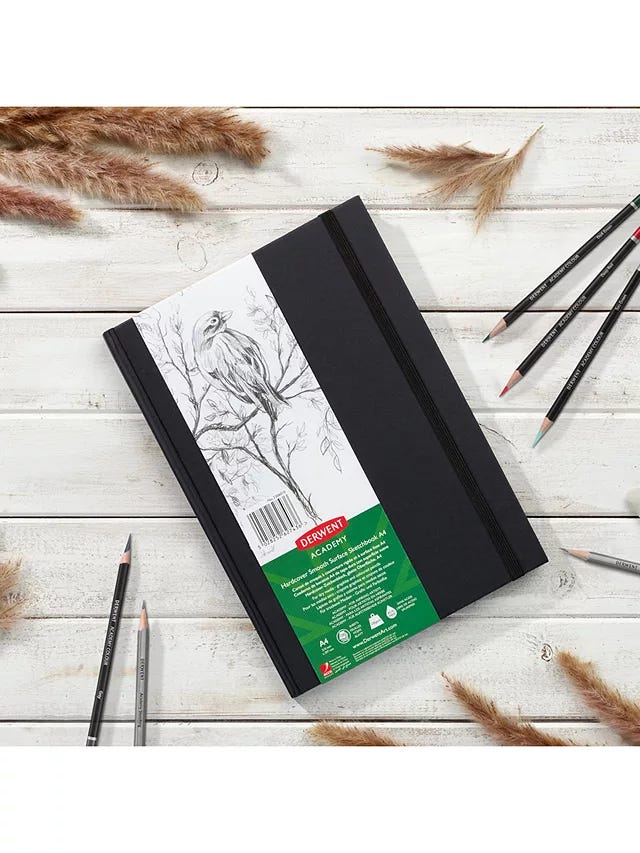
I charted Bink’s travels aboard Tracker, my alien organic ship, and kept copious notes in book form. They got destroyed when my old apartment got flooded in 2004; my old Libra and Starfox stories were wiped by a system crash the year later.
Always remember to back things up, kids.
Years later, and I’m still deeply into gaming. Mongoose Publishing brought back Traveller, but I couldn’t really bring back Bink and Tracker into the new game. Too focused on military conflict. They gave me Legend, a d100 - based game which was, in effect, the RuneQuest engine stripped out of the RQ game and presented as is, without a setting. Legend had a lot of promise, and I really would love to buy the rights to that compact game from Mongoose, dust it off, and start creating settings for it, such as a science fiction setting, a modern setting, and so on.
The Design Mechanism gave me Mythras, which also game me the Luther Arkwright roleplaying setting, that absolutely madcap SF setting of dimension-hopping psychics bonking and murdering their way through the multiverse of Bryan Talbot.
Frostbyte Books gave me M-Space, a Traveller-like setting where I could reimagine Bink and Tracker. I created a setting for that, calling it Terra Quadrant before I discovered that Stellagama Books had already taken that name for their Traveller clone Cepheus Engine.
Frostbyte Books also gave me Comae Engine, a rules-light pocket book roleplaying game without a formal setting, allowing for modern, fantasy, horror, science fiction and other kinds of games to be played.

Between Traveller and the World of Darkness, I’d briefly flirted with other games. R Talsorian had given us the original Cyberpunk, first of its kind, presented in the roughest format you could imagine - looking like an underground hacker manual. Steve Jackson Games’ GURPS Cyberpunk and GURPS Illuminati were a milestone in gaming - because v 1.0 of GURPS Cyberpunk got seized by the Secret Service in what became gaming legend.
Around the time I picked up my first book on chaos magic, Liber Null & Psychonaut, I also bought SJG’s Authentic Thaumaturgy by Isaac Bonewits, followed not long after that by Bonewits’ Real Magic. By that time, I had become a chaos magic practitioner, something which I still practice to this day: but I shall talk about that in the next post.
And then there was DoubleZero.
I totally fell in love with Lightspress Media’s DoubleZero setting. In its current incarnation, it’s going stronger than ever, with three settings devoted to espionage, its original playing field; one setting emulating Gerry Anderson’s series such as Captain Scarlet and The Mysterons and UFO; and settings allowing you to play out the plot of heist movies from The Hot Rock or The Taking of Pelham 123 to more modern fare such as Now You See Me. The title Piledriver allows you to play professional wrestlers, and seriously you don’t have to play them as American wrestlers - the book can be tweaked to play sumo wrestlers, or Mexican Luchadores, with very little effort.
As I write this, the most recent DoubleZero game introduced the Space Opera genre, allowing me to reimagine Bink and Tracker plying the stars. I’m now on the lookout for some notebooks which I’ll be able to use - by the way, DoubleZero includes core books on journaling for players and Games Masters - and I can start keeping daily logs on Bink’s adventures once again.
Lightspress has also given us a fantasy book series, sisters to DoubleZero. The Foragers Guild books present a more fantastic series of settings and genres; and I can imagine a whole different setting, one based on a kind of cozy science fantasy, where characters such as Master Axan from my Chronicles of Shirae can ply their trade from world to world, realm to realm, wandering barefoot through portals, half naked, lithe, just radiating sexual energy, hairless save for their eyebrows and a topknot, raising energies to work powerful magics using orgone to fuel their workings and travels through the void.
I’m still really into gaming. Nowadays, I exclusively play solo, using oracles ranging from Ken Wickham’s incredible fact and character generators through to the Mythic GM Emulator, and the Solo books from Parts Per Million, with other books from Ken Woodrum’s Fishwife Games, Atelier Clandestin, and Amagi Games’ Witchery (thanks to Levi Kornelsen for that one).
There is more variety available nowadays for solo play than ever before. Gaming has become such a lush field of resources since its origins in 1973, and D&D’s publication in 1974. And I suspect that it is a lifelong addiction, at least for me.
The dopamine rush of gaming is stronger than hypnokink, for me. Stronger than smoking, which I dabbled in for a brief time. If everything else ceased to exist in my life, if all I had to cling to was one thing, this - tabletop roleplaying games - is likely to be the thing I will cling to. It’s an addiction, but - like coffee - it’s a life-sustaining one.